Pursuing Wisdom in Scripture and Theology
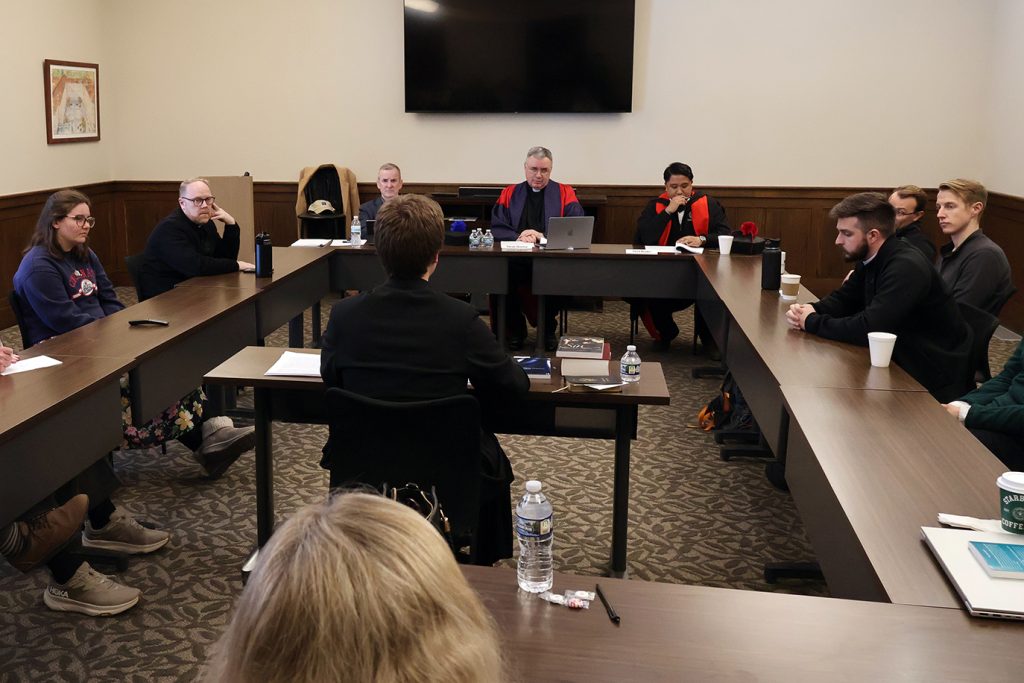
The story below was originally published in The Athenaeum, MTSM’s bi-annual magazine. The Athenaeum is published twice a year for alumni, patrons and friends of Mount St. Mary’s Seminary & School of Theology. To be added to the mailing list, contact: Heidi Walsh at 513.233.6159 or hwalsh@athenaeum.edu.
The School of Theology at Mount St. Mary’s offers master’s degrees accredited by the Higher Learning Commission and Association of Theological Schools to both seminarians and lay students in Biblical Studies, Catholic Studies and Theology, in addition to a master’s in Pastoral Ministry for lay students. Though difficult and demanding of the students who complete these programs, these men and women are the people who will be setting the course for their parishes and ministries within the Church for years to come.
“When you think of a peak, it draws the surrounding landscape to it and represents the body around it, and that is how I see what our students who complete their master’s degrees represent,” Samuel B. Johnson, Ph.D., the Dean of the School of Theology said. “If you choose to climb that peak, you get a different view of that landscape that you otherwise would not get if you do not.”
For seminarians in the priestly formation program, the Master of Arts in Biblical Studies or Theology is an optional add-on in addition to the 110-credit Master of Divinity program they complete en route to ordination to the priesthood. The add-on master’s degree requires an additional six credit hours of course work and six credit hours connected to the completion and eventual defense of a 50-to-70 page thesis. For lay people, the master’s degree requires 36 credit hours of classes in addition to the thesis (33 credits and a capstone project for the master’s in Pastoral Ministry).
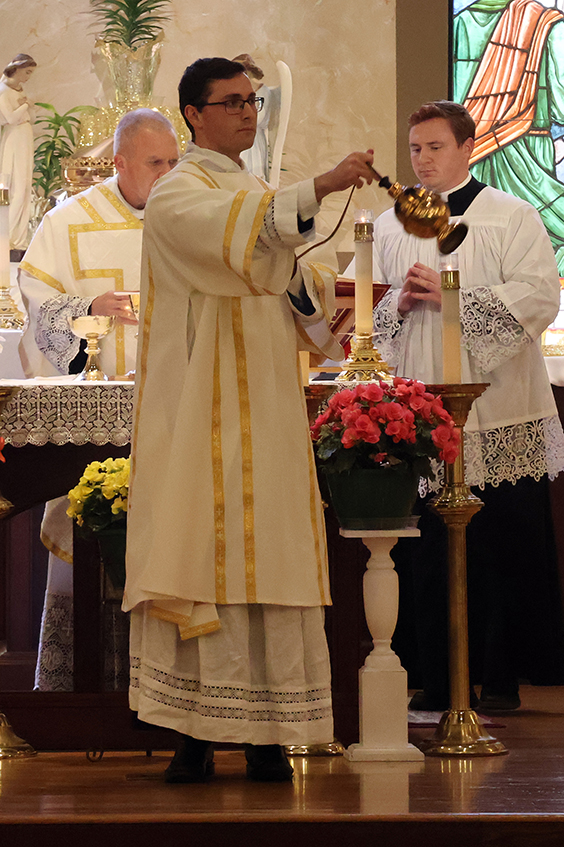 “I wanted to do it because I saw it as something that was difficult, but would also be a great capstone to my seminary education,” Deacon Peter Townsend, a seminarian from the Diocese of Charlotte said. “When I was in college seminary, we had a priest visit us and he was very clear that the Church needed priests who can understand and defend Her faith. That changed my perspective and really made me try my best to study and delve into the intellectual traditions of the Church, which is something I think MTSM is really great at.”
Deacon Townsend’s Master’s Thesis for the Master of Arts in Theology is entitled On the Particularity of Priestly Friendship: A Thomistic Study of the Priest’s Distinct Call to Friendship with Christ In Light of the Universal Call to Holiness, with Alan Mostrom, Ph.D., Associate Professor of Systematic Theology at MTSM, serving as his Thesis Director.
“I was fascinated by the idea of priestly victimhood that is teased out in Scripture and a lot of different sources,” Deacon Townsend said. “In conversation with Dr. Mostrom, our discussion shifted to talking about priestly friendship with God. It was a very worthwhile endeavor and I am really glad that I was able to do that.”
The relationship with a Thesis Director is something that Deacon Curtis Gross, a seminarian for the Archdiocese of Cincinnati, also talked about when discussing how his thesis for the Master of Arts in Theology, The Meaning of the State of Grace Applied to Critical Questions in Moral Theology, came together with his Thesis Director, Rev. Andrew C. Pinsent, Ph.D.
“When Father Pinsent came here a couple of years ago, Father (Anthony) Brausch tipped me off that I should ask him to be my Thesis Director,” Deacon Gross recalled. “Father Pinsent has written so many of his own works, he knows how to write well and how to direct a student to write well. In addition, he offered many works and resources that helped guide me on my way.”
At the Heart of Study: The Maly Library
Something that comes across when discussing with students and faculty about how putting together a master’s thesis happens is the importance of reading.
“We have a great library here,” Deacon Gross said. “It is a great blessing to be able to be looking for something and being able to pull it off the shelf. In addition, the library is a great help with how to write a thesis.”
 The Eugene H. Maly Memorial Library is named after Rev. Eugene H. Maly, a long-time faculty member and scholar of scripture at MTSM who balanced a commitment to scholarship (he served as a peritus at the Second Vatican Council) and the people of God as a priest until his passing in 1980. For Connie Song, M.S.L.S., Director of the Maly Library, that focus on scholarship extends to all parts of her and her staff’s jobs.
“We are here for the students, and want to be able to have the resources, whether they be books or how to put together a thesis, that any of our students need,” Song said. “We are here to see them finish and graduate.”
One of the tools that Song and the Maly Library staff has invested resources into over the years has been the process and technical side of putting together a thesis that meets the standards of an academic institution. On the Maly Library’s website, there is a Thesis Guide page that offers a one-stop shop for the needs of those in the master’s degree program preparing to write their thesis, from the academic requirements, to how citations work and even thesis topics that have been done by School of Theology students throughout the years.
“As librarians, we love to make things uniform and that is the purpose of the Thesis Guide,” Song stated. “In addition, creating the Thesis Guide offers the library staff more opportunities to answer one-on-one questions that students are facing throughout the writing process.”
As residents of the Seminary, the seminarians in study for priestly formation have easier and more frequent access to the library itself, but Song ensures that she, her staff and their resources are available to the lay students who are balancing jobs, families and other tasks beyond their academic studies.
“The Thesis Guide is really important for lay students who have not been in school or an academic setting for a little bit of time,” Song observed. “We will meet any student where they are and in whatever way that we can. That can be in the big ways like the Thesis Guide, but also smaller ways like tips on how to manage time or reminders to save their in-progress thesis in more than one place.”
The Final Step: Defending the Thesis
Upon the approval of a thesis topic and thesis director, Dr. Johnson, in his role as the Dean of the School of Theology, selects a second reader from the faculty who will work with the Director and student during the research and writing process on putting together the thesis. Upon completion of this thesis, the director and second reader will judge if the thesis is suitable for a defense and will schedule it.
Upon the scheduling of the defense, Dr. Johnson will nominate a third reader, who will read the completed thesis and be part of the examination board at the thesis defense, which is required to happen at least two weeks before graduation.
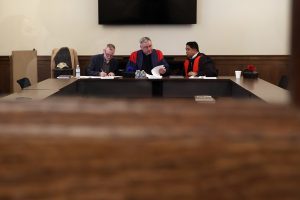 The thesis defense begins with the student offering a summary of their findings followed by two rounds of questions from the examining board, usually in an alternating format. Following that, the examination board meets to decide whether the thesis has been successfully defended, decide on a final score and whether any revisions to the thesis needs to be made before being deposited to the library.
For Song, while the depositing of a completed master’s thesis leads to a process of printing and binding for the Maly Library’s own shelves and uploading those that “Passed with Distinction” to the OhioLINK Electronic Theses & Dissertation Center (ETD), there is also the process of evaluating how they helped students and what she and her staff can do better in the future.
“I always ask what they would have liked to know from the beginning,” Song said. “Any tips we get we either compile within the Thesis Guide or to help us make larger updates. We continue to learn how to do the best job in helping students get degrees.”